5 Reasons Aging Arteries Don't Respond to What You're Already Doing
| Resilia® Aged Garlic | Standard Cardiovascular Routine | Regular Garlic / Fish Oil | |
|---|---|---|---|
| Contains SAC (S-Allyl-Cysteine) | ✓ 1,200mg AGE | ✗ Not addressed | ✗ No SAC |
| Supports the Body's Natural Nitric Oxide Pathway | ✓ Dual ingredient | ✗ Not addressed | ✗ Not addressed |
| Includes CoQ10 in Active Ubiquinol Form | ✓ Ubiquinol | ✗ Not included | ✗ Not included |
| Supports the Body's Calcium Handling Toward Bones | ✓ K2 MK-7 | ✗ Not addressed | ✗ Not addressed |
| Designed to Sit Alongside Your Existing Routine | ✓ Different pathway | — | ✓ Yes |
| Money-Back Guarantee | 30 Days | — | 30 days / none |
You've cut the sodium. You exercise. You eat clean. You follow your wellness routine carefully. And you may still feel like something underneath isn't quite where it should be.
Here's a piece most people aren't told clearly:
How efficiently the heart moves blood through the body has a lot to do with how flexible the arteries themselves are. The question is: what determines that flexibility over time?
The answer isn't salt. Salt affects fluid volume — one piece of a much larger picture. The piece that often gets overlooked — the one that may explain why some routines feel incomplete — is arterial flexibility.
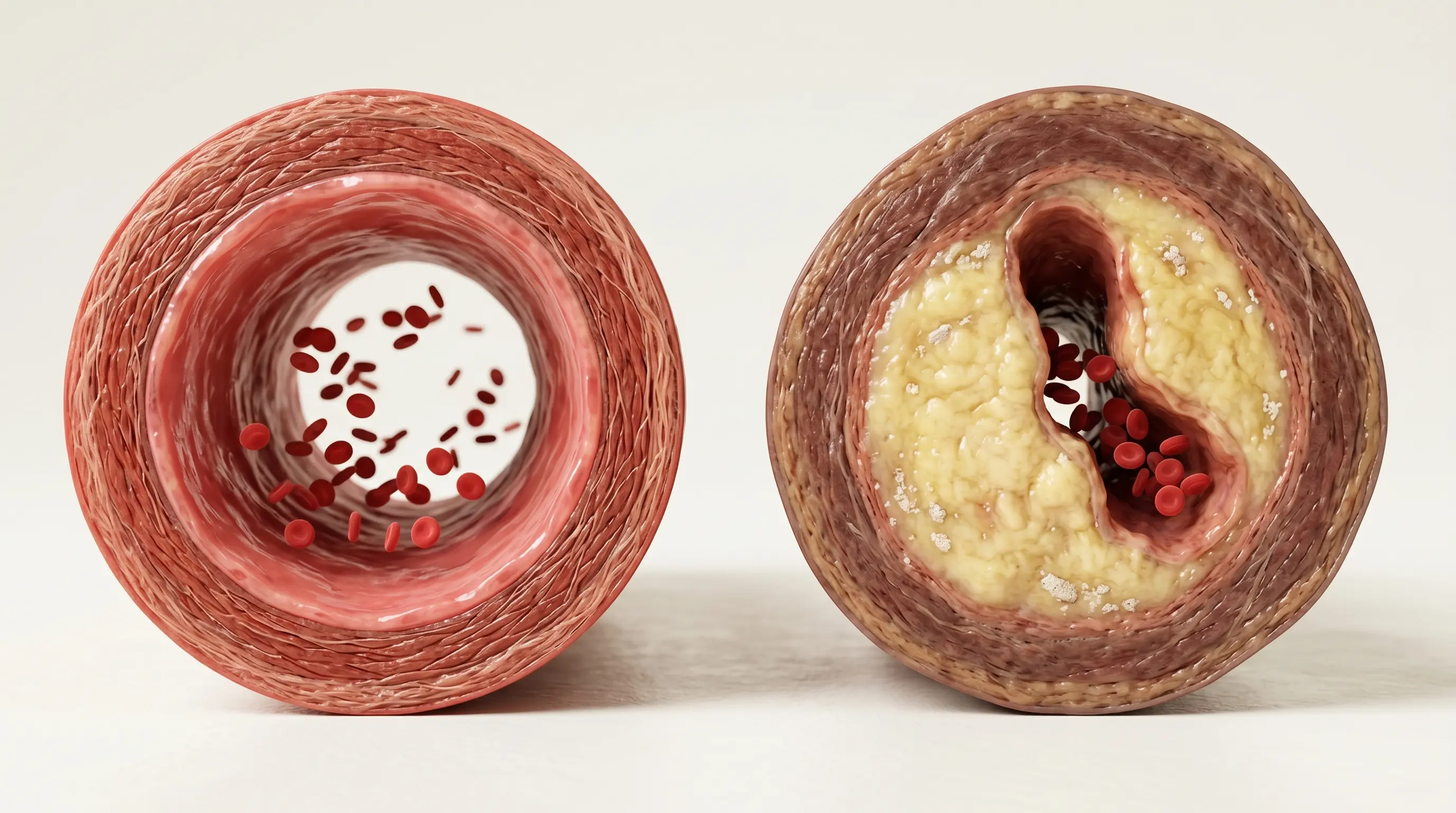
Over years and decades, calcium can quietly accumulate inside artery walls. The same way scale builds up inside old pipes. The walls become less flexible. They stop responding the way they once did. And when arteries lose their responsiveness, the cardiovascular system may have to work harder than it should with every beat.
That's the variable a lot of routines miss. Not salt. Not stress. The way calcium is handled across the body — and what that may mean for arterial flexibility over time.
This is the part that often goes unexplained — not because anyone's hiding it, but because most cardiovascular routines weren't built around it.
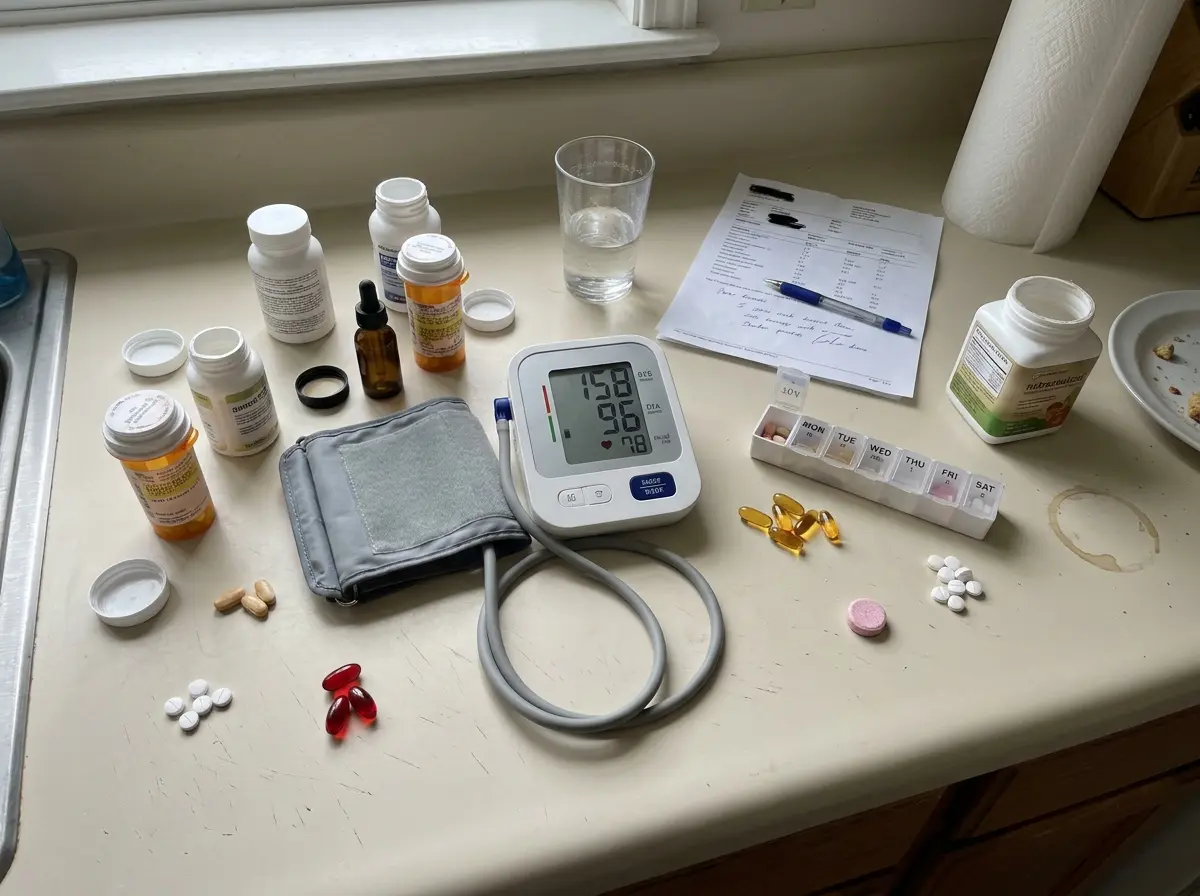
Standard approaches tend to focus on managing daily readings and short-term variables. Each one does its specific job, and each one has its place.
But the slow accumulation of calcium inside artery walls is a different kind of variable. It's not a daily fluctuation. It's a long-term structural shift. That's why the body's natural nitric oxide pathway — the signal arteries use to relax and respond — can quietly become less efficient over decades, even when the day-to-day numbers look fine.
This may be why some people feel "managed but not great" — fine on paper, but quietly tired, foggy, cold-handed, breathless on stairs. Those experiences are common, and they're often attributed to aging. But they may also be downstream of cardiovascular performance that's quietly slipping.

A lot of people focused on cardiovascular wellness are also dealing with something they've quietly attributed to getting older: tired all the time. Foggy by mid-afternoon. Winded going up a flight of stairs. Cold hands and feet. Legs that feel heavy by the end of the day.
These may not be separate age-related complaints that all coincidentally showed up at once. They may be downstream effects of circulation that isn't moving as efficiently as it once did.
And if you're on cholesterol-lowering medication, there's another piece worth knowing about. That class of medication blocks a pathway that produces cholesterol — but the same pathway also produces CoQ10, the molecule that fuels cellular energy in heart muscle and the cells lining the arteries. Each day on that medication, CoQ10 levels may quietly trend downward. The fatigue many people report on these medications isn't a mystery. It's a documented pharmacological consequence worth talking to your doctor about.
Cholesterol gets monitored. CoQ10 typically isn't. But for a lot of people, it may be quietly declining.
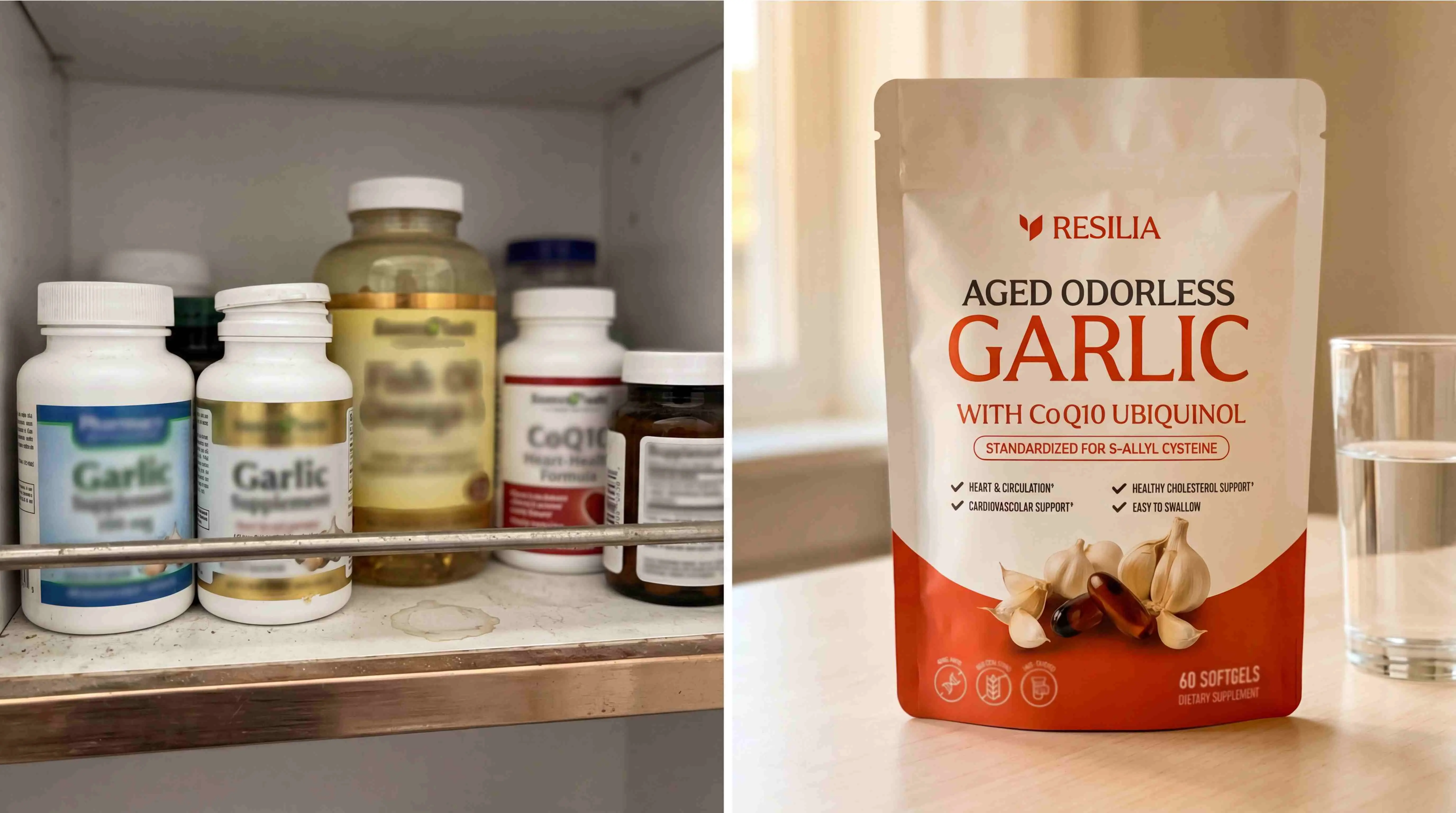
You've tried garlic pills. Fish oil. Magnesium. Maybe CoQ10. Maybe turmeric. Some may have helped a little. None may have moved the needle the way you hoped.
Here's why each one may have fallen short — and it has nothing to do with supplements being useless:
❌ Fish oil — supports triglyceride and inflammation-related markers. Plays its part. But doesn't address arterial calcium handling, the body's natural nitric oxide pathway, or CoQ10 levels. One lever in a multi-lever picture.
❌ Standard CoQ10 (ubiquinone) — the oxidized form most supplements use. The body has to convert it to ubiquinol before using it. That conversion may become less efficient with age — meaning the people most focused on CoQ10 may absorb the cheap form least well.
❌ Magnesium — supports vascular relaxation. Genuinely helpful as part of a routine. But doesn't address the calcium handling system, CoQ10 levels, or the long-term flexibility variable. One piece, not the system.
❌ Turmeric — supports a healthy inflammatory response. But inflammation isn't the same variable as the structural one. The long-term shift in arterial flexibility may ask for something different.
Each of these covers one mechanism. The biology underneath has three. Calcium handling. Cellular energy production. Long-term calcium direction. Cover only one and the other two may keep working independently.
That may be why nothing has fully landed. The effort wasn't the issue. The approach may have been incomplete.
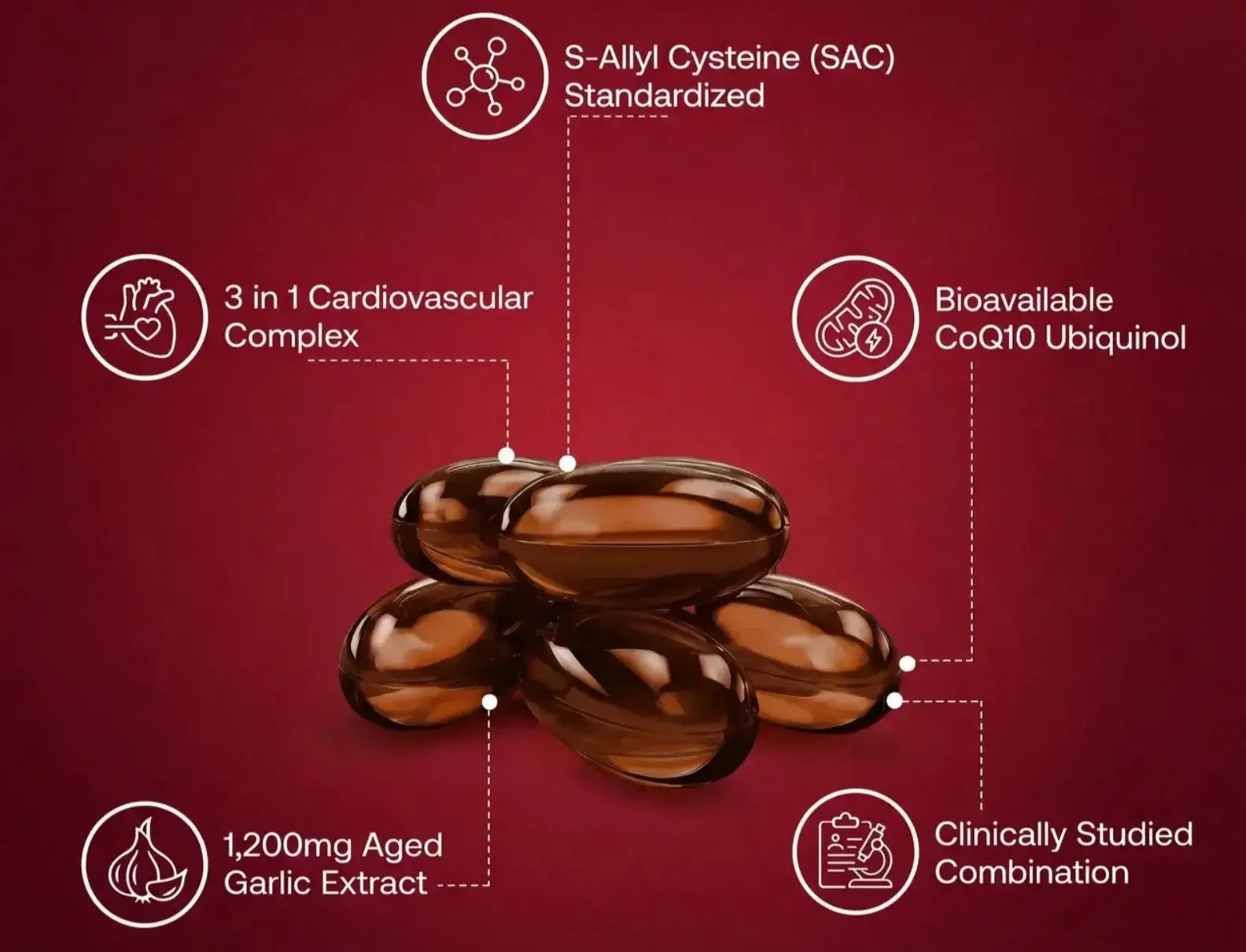
The biology behind arterial flexibility has three components. Each one is a different lever. No single ingredient covers all three. That may be why single-ingredient supplements feel like they're "doing something" but never quite complete the picture.
Resilia® Aged Garlic was built as a 3-step system — each ingredient supporting a different part of the same picture:
SAC — the compound created only during the 18-month aging process — is the compound the research has identified as the active agent in garlic's cardiovascular support profile. It's been studied for its role in supporting healthy circulation and the body's natural nitric oxide pathway, the signal arteries use to relax and respond. A 2024 meta-analysis of 9 randomized controlled trials reported the studied effects on cardiovascular markers showed up consistently at this dose. Below 1,200mg, the data didn't show consistent results.
Step 2: FUEL — CoQ10 Ubiquinol (100mg Kaneka QH)
The active, ready-to-use form of CoQ10. Supports cellular energy production in the cells lining the cardiovascular system, so they can do their part alongside what AGE is doing. Also supports the body's natural nitric oxide pathway from inside the arterial wall — a complementary route working alongside AGE's. If you're on cholesterol-lowering medication, this directly resupplies a molecule that medication may quietly reduce. The 100mg dose matches the dose used in research on endothelial function support.
Step 3: DIRECT — Vitamin K2 MK-7 (180mcg)
Supports Matrix Gla Protein — the body's calcium traffic director. Helps direct calcium toward bones, where it's wanted. Without K2, the calcium handling system may operate without clear direction. In a 3-year double-blind trial, the group taking 180mcg K2 MK-7 maintained measurable arterial flexibility markers compared to placebo. This is the long-term lever that helps the system stay balanced over time.
And here's what's structurally different about this formulation:
The FAITH trial — a year-long, double-blind randomized controlled trial — studied Aged Garlic Extract and CoQ10 together as a combined formulation for cardiovascular support. Researchers reported improvements in markers of vascular elasticity and endothelial function, with findings holding regardless of participants' existing health regimens. No other garlic supplement we're aware of combines all three ingredients at the dose levels used in the published research.
- 1,200mg AGE — the 2024 meta-analysis threshold
- 100mg Ubiquinol — the dose used in endothelial function research
- 180mcg K2 MK-7 — the dose used in the 3-year arterial flexibility trial
- 20-month aged. Completely odorless. Two softgels a day.
— Robert T., verified customer
Three Ingredients. Three Roles. One System Built Around the Research.
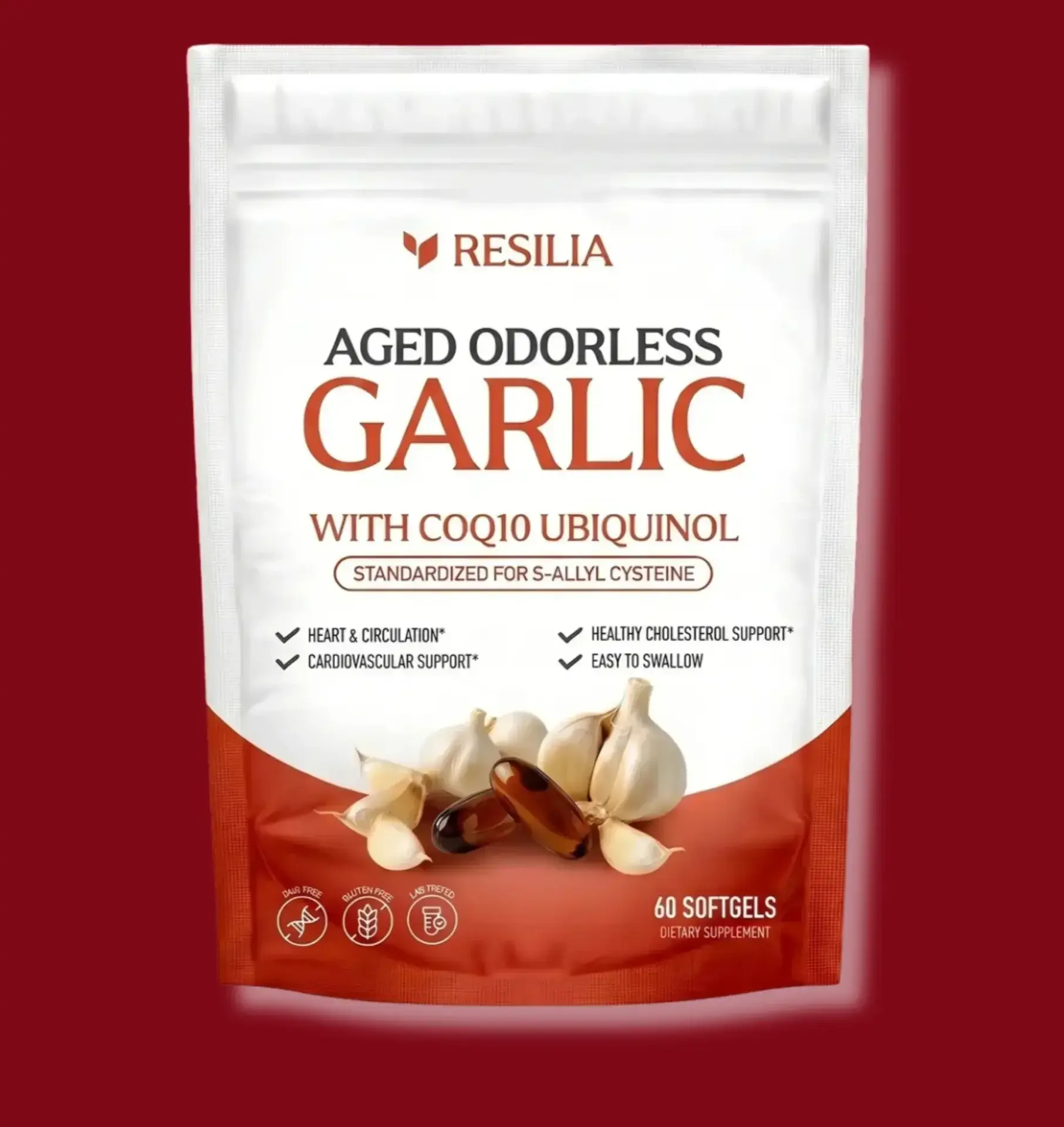
Three ingredients. Three roles. One system. Two softgels a day, designed to sit alongside your existing wellness routine. Doses matched to the published research. 30-day money-back guarantee.