You're Not Sick. You're Not Allergic. So What's Behind the Mucus That Won't Quit?

You're not reading this because you've never tried anything. You're reading this because you've tried everything.
Mucinex. Flonase. Zyrtec. The neti pot, morning and night. Sudafed on the rough days. Steam. Cutting out dairy. That supplement someone at work swore by.
Some of it you've stuck with. Some of it you've moved on from. Either way, you've tried a lot.
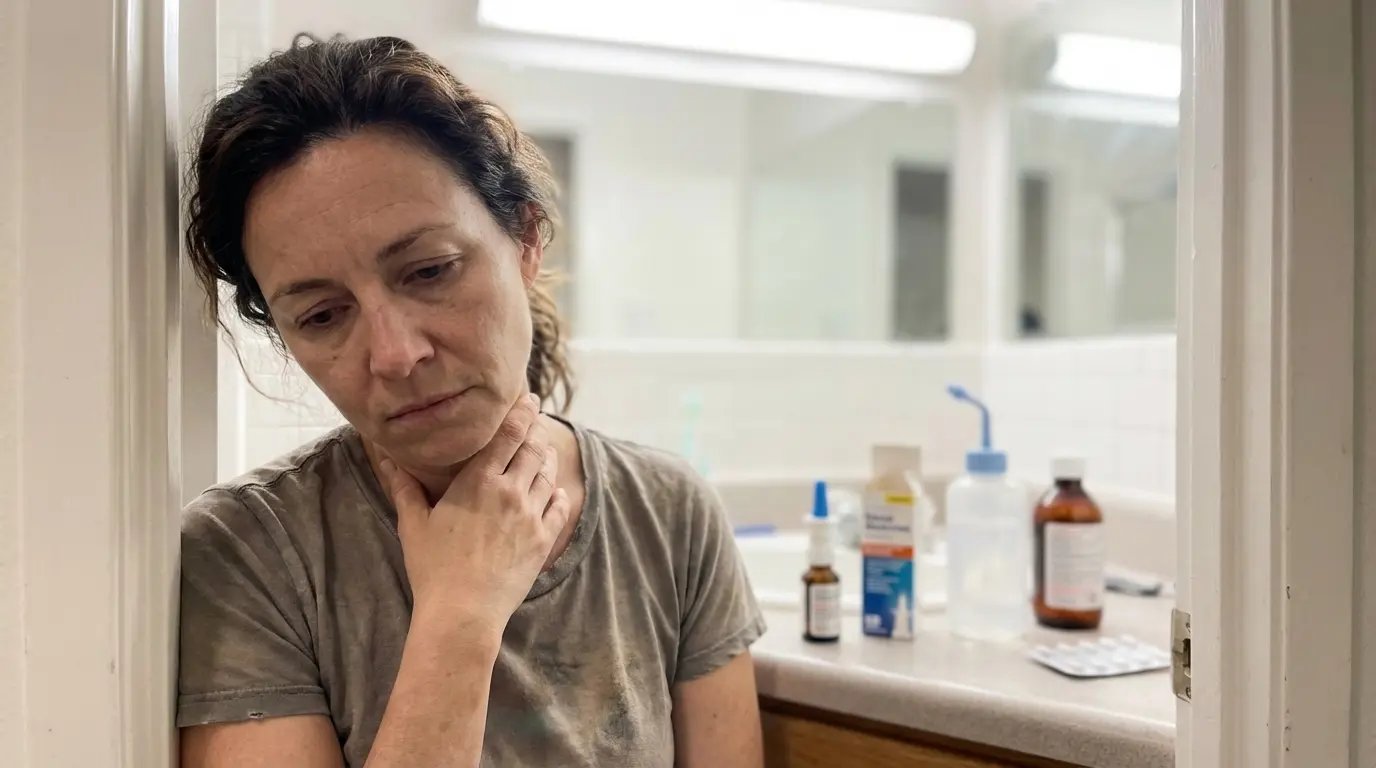
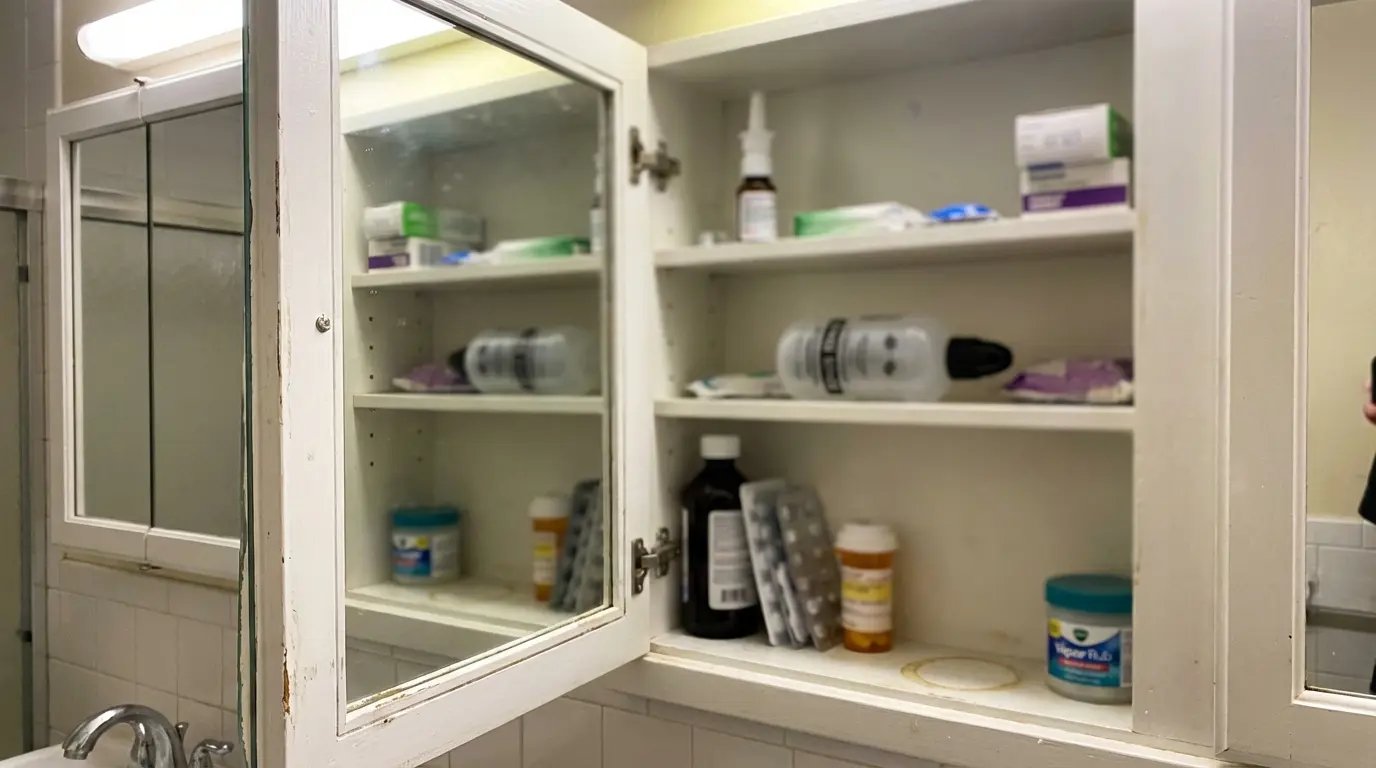
And then your body goes right back to producing mucus. Same volume. Same thickness.
You've accepted it. You plan around it. You've stopped telling people about it because nobody who doesn't live with it understands how much it takes from you.
But here's what you've probably never been told:
Your body isn't overproducing mucus because it's broken. It's overproducing because something inside your sinuses is telling it to, and nothing you've ever been given was designed to stop that signal.
Why Your Body Won't Stop Making Mucus. Even When You're Not Sick.
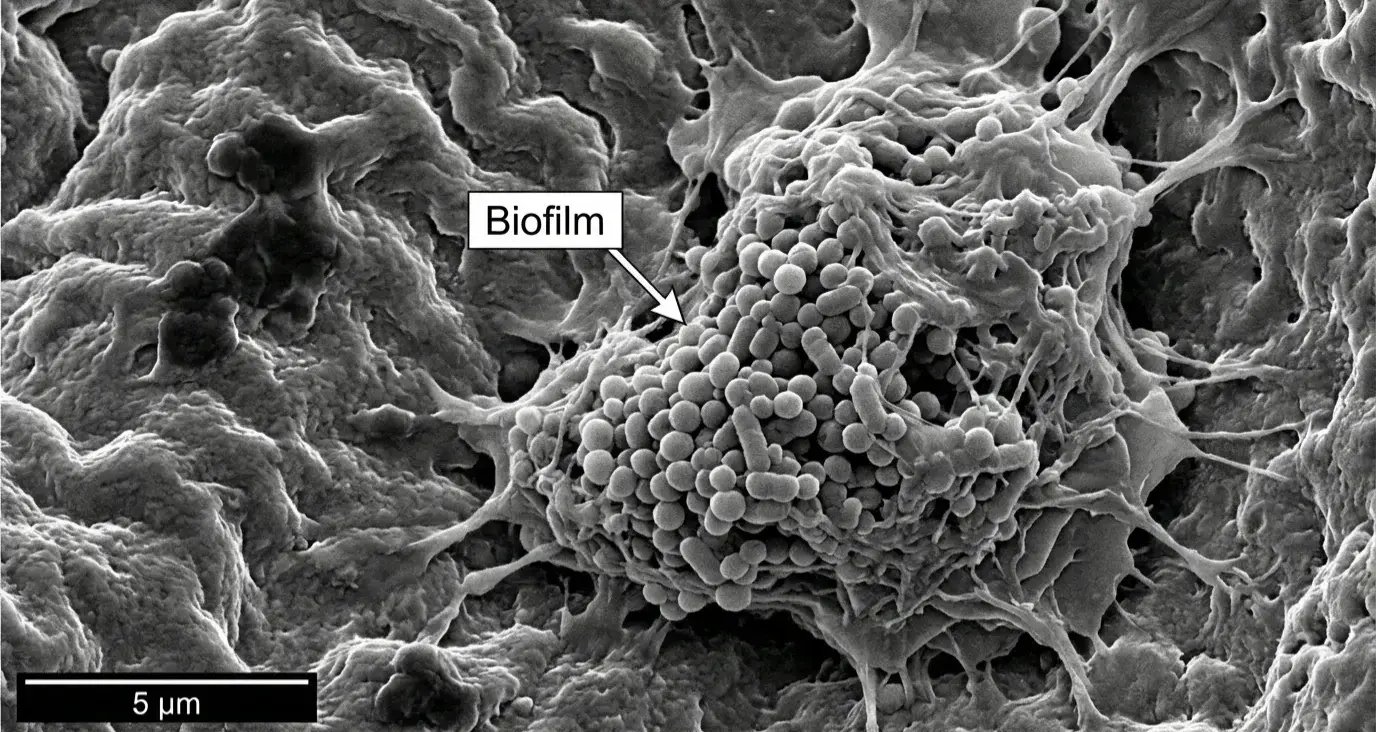
Here's what's actually happening inside your sinuses:
- When bacteria colonize sinus passages, they don't just float around. They settle.
- They attach to the tissue wall.
- And they build a protective layer around themselves, a structure of proteins, sugars, and bacterial DNA.
Scientists call it a BIOFILM. It can anchor to the tissue like a barnacle to a hull.
And from behind its shield, it does one thing continuously: It can leak bacterial toxins into the surrounding tissue.
Your immune system detects those toxins and responds the only way sinus tissue knows how: inflammation and mucus. Try to flush the threat.
But it can't flush this threat. The colony is anchored. Protected. So the immune system keeps the order running: produce more mucus, produce more mucus, produce more mucus.
That production order never gets cancelled because the thing triggering it never gets cleared. Not in January. Not in July. Not on vacation. The colony goes wherever you go.
Why Every Treatment You've Tried Only Deals With the Output
Once you understand the biofilm, every product failure clicks into place.
Thins the mucus so it drains easier. It's designed to make existing mucus easier to clear rather than to reduce how much the body produces.
Nasal steroid sprays work by reducing inflammation in the nasal tissue. Their effect is tied to ongoing use, so symptoms may return once the medication wears off if the underlying cause is still present.
Saline nasal rinses work by flushing the surface of the nasal passages. They can help clear mucus and irritants from the areas the solution reaches, but because rinsing acts on the surface, it may not address factors located deeper in the tissue.
Antihistamines act on the histamine pathway, which is one of several biological pathways involved in mucus production.
Antibiotics generally act on free-floating bacteria. Research suggests bacteria within biofilms can be less susceptible to some antibiotics than free-floating bacteria.
Every product targets something that happens after the production order has been sent. Not one was designed to reach the thing sending it.
You've been mopping the floor for years. The faucet has been running the entire time.
What You Can Do About Biofilm
Which is why researchers started asking a different question, not how to manage symptoms, but which compounds actually interact with biofilms in the first place.
The compound that kept appearing across the research is called Carvacrol.
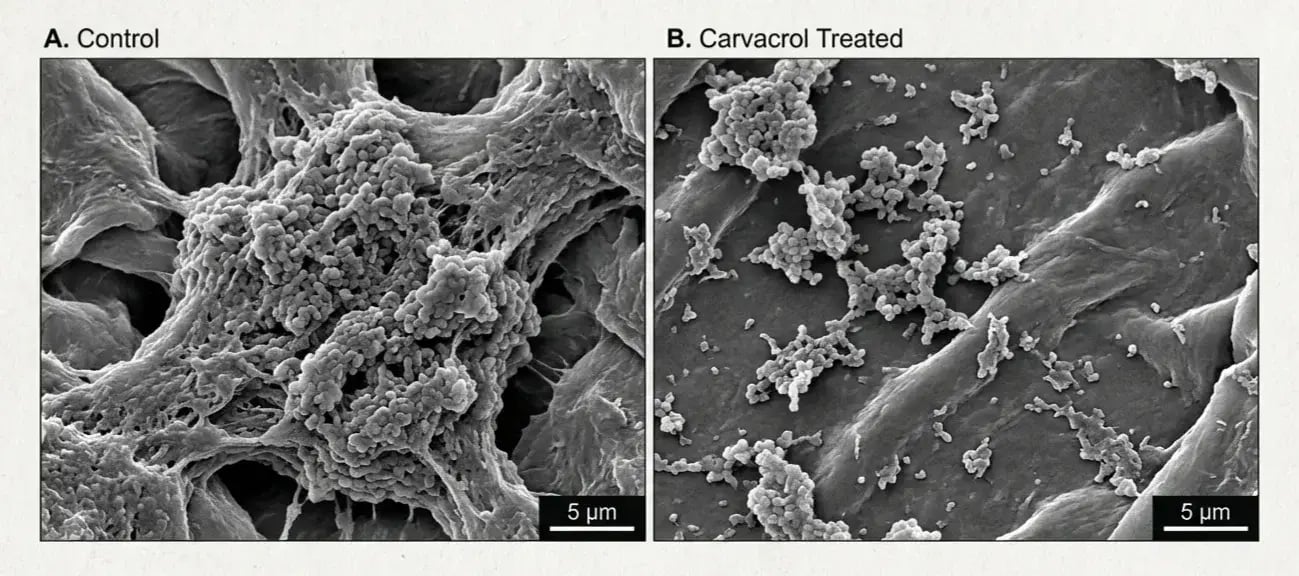
Carvacrol is the active compound in Oil of Oregano. Mediterranean healers used oregano for respiratory problems for over 2,000 years without knowing why it worked. Now we know.
🛡️ First, it gets inside.
The biofilm builds a protective shell that blocks water-based treatments. Carvacrol is oil-based, so it passes through instead of bouncing off.
💥 Second, it breaks the colony apart.
Research showed it reduced established biofilm by over 60%. Not only prevented new growth, but broke down what was already there.
🔌 Third, it cuts off communication.
Bacteria in a biofilm talk to each other constantly. Carvacrol jams the signal. A colony that can't communicate can't rebuild.
When the colony breaks, the toxin stream slows. The tissue is no longer under assault. Inflammation drops. And the mucus production, for the first time in years, finally slows.
The Problem With Most Oregano Oil Products
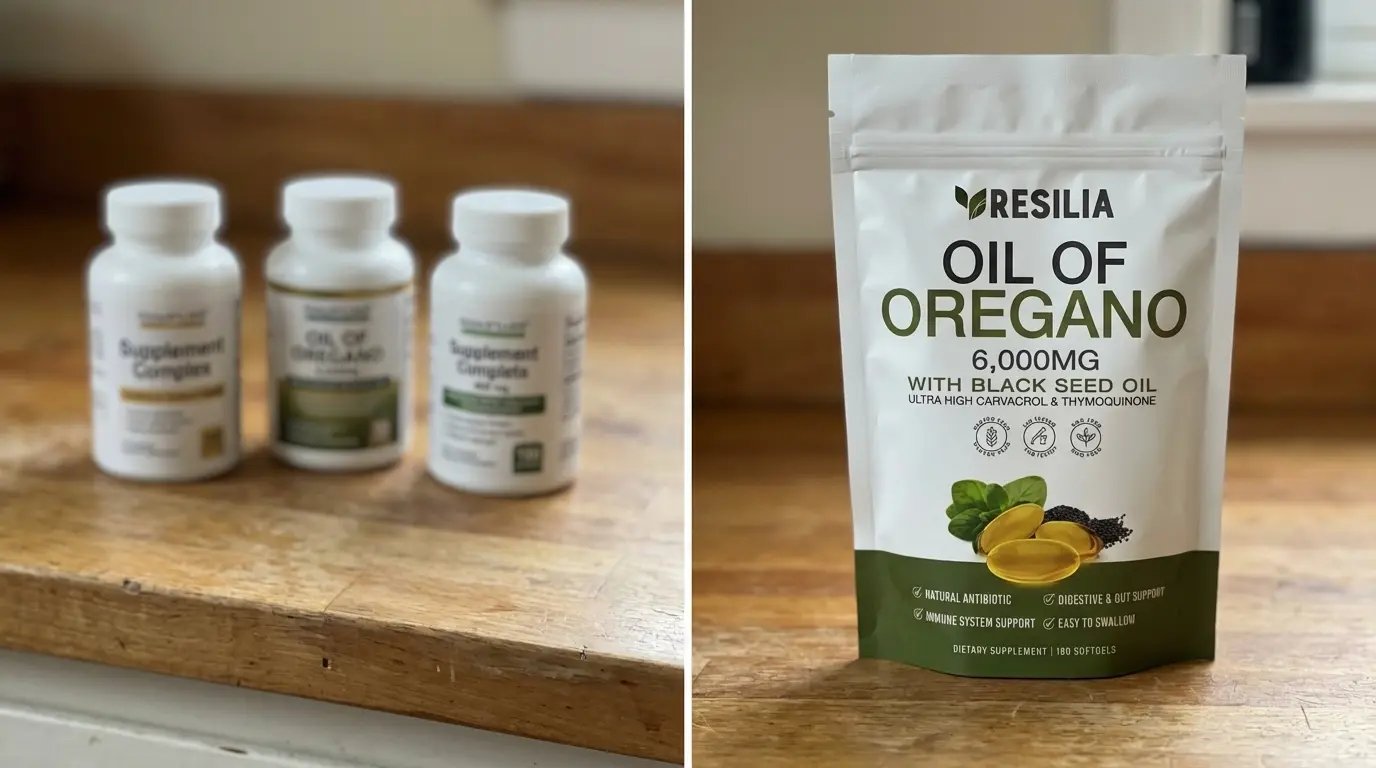
Here's where most people get burned.
When the research on carvacrol got attention, the market filled with oregano oil products. Most have one thing in common: the carvacrol concentration is nowhere near the levels the studies called for.
Without carvacrol at therapeutic concentration, oregano oil is a cooking ingredient with a health label. This is why people try it, feel nothing, and say "oregano oil doesn't work." It works. But concentration is everything.
I went through five products before finding one standardized to the levels the research actually used. Clean extraction. No dilution. Third-party tested for potency and purity.
That product was Resilia — Oil of Oregano.
| What Matters | Why It Matters |
|---|---|
| Carvacrol at research-grade levels | Standardized to the level shown to penetrate, degrade, and disrupt biofilm colonies. Every batch. |
| Nothing hidden behind a "proprietary blend" | Every ingredient listed. Every amount disclosed. No filler oils bulking up the capsule to cut cost. What's on the label is what's inside. |
| No filler, no shortcuts | Formulated at the level where the mechanism works, not the level where the margin is widest. |
What Changed for Me
Within weeks, the 3am wake-ups started getting less frequent. The morning ritual got shorter. The throat-clearing (the thing I'd been self-conscious about on every phone call for almost a decade) started fading.
Not because something was drying me out. Not because something was thinning the output. Because for the first time, something was addressing the colony that had been ordering the production.
The nightstand is empty now. The cabinet is cleared out.
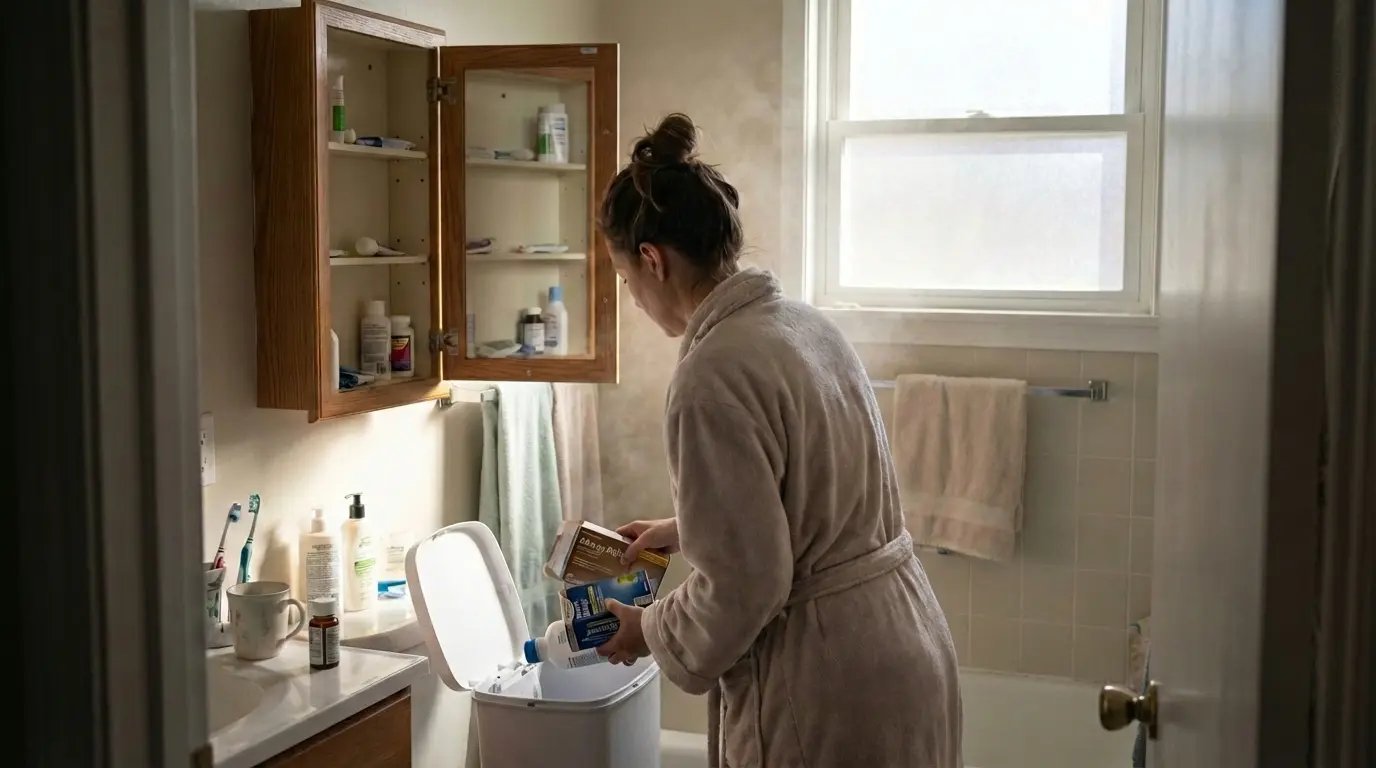
I told my brother. Same pattern: slow start, then a shift he couldn't explain away. He told a coworker. The coworker told friends. I started getting messages from people I'd never met asking what I was taking.
One of those messages came from a man named David. He'd had post-nasal drip for seven years. Tried everything I'd tried. He wrote me three weeks after starting:
"I woke up and swallowed and there was nothing there. No thickness. No coating. I just sat on the edge of the bed. I couldn't remember the last time that happened. Then I got angry. Because it could have been every morning for the last seven years."
That message is why I'm still talking about this.
What You Need to Know Before You Decide
Every month you spend managing the output is another month the colony has to dig in deeper. Biofilm doesn't always stay the same size. It can mature. It can thicken its shell. The tissue around it remodels to accommodate the inflammation, what was temporary can becomes structural.
The only downside I've found: it goes out of stock more than I'd like. I started ordering before I run out instead of after.
Why I Was Finally Willing to Try
I'd been burned enough times that I almost didn't try this one either. What made the difference wasn't the label or the marketing. It was knowing that if nothing changed, I wasn't out anything. A 30-day refund. No arguing, no hoops. That's what turned it from one more gamble into something I could actually test. If it doesn't work for you, you get your money back. That's it.
You either notice a difference or you pay nothing. That's the whole deal.
Here's how I think about it now:
You can keep managing the output. Mucinex every morning. Neti pot twice a day. Throat-clearing on calls. 3am wake-ups. The same ritual, the same products, the same results... and hope the production slows down on its own.
Or you can try the one thing designed to reach the source of the production order, and find out if your mornings change the way mine did.
The colony doesn't leave on its own. The faucet doesn't close itself.
But it can be turned off.
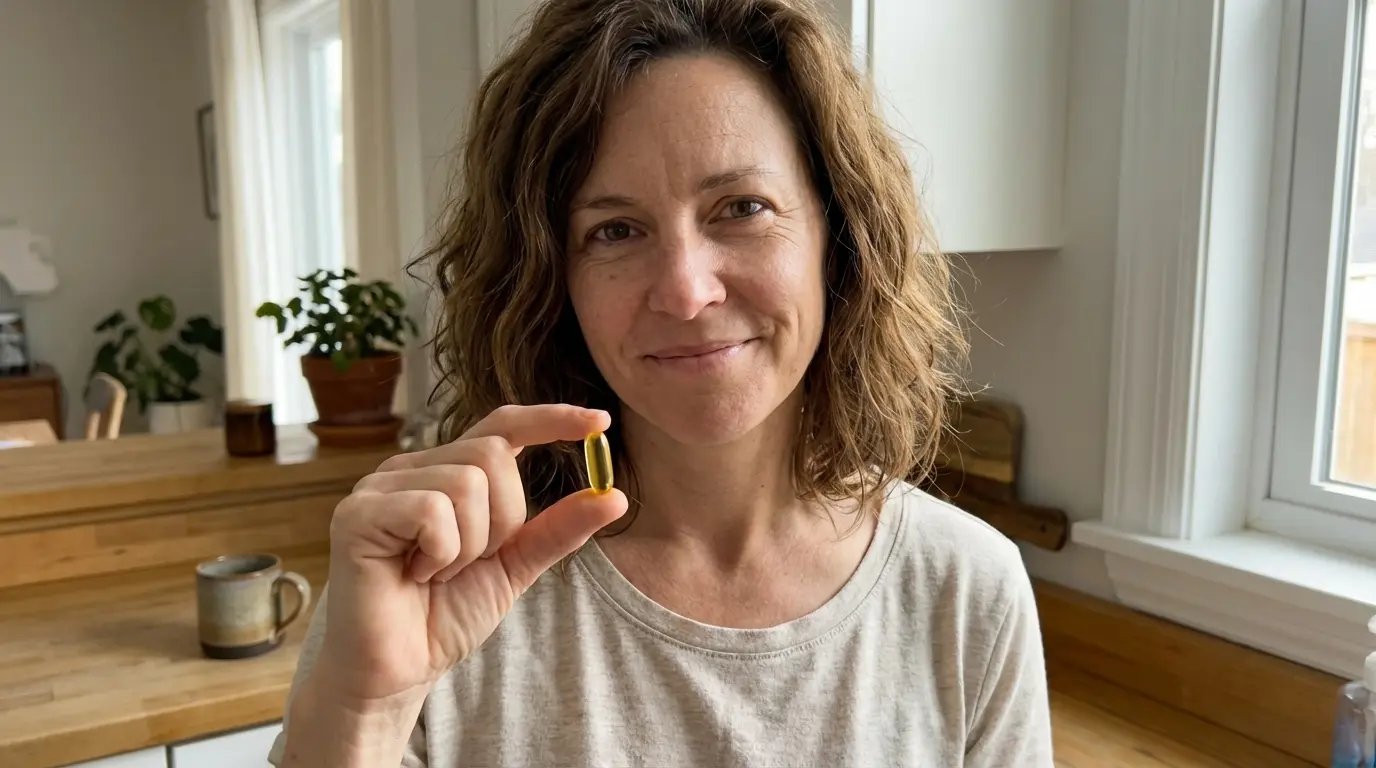
See How You Feel After 30 Days
30-day guarantee. No risk. Find out what your mornings could feel like.
Try Resilia Oil of Oregano →